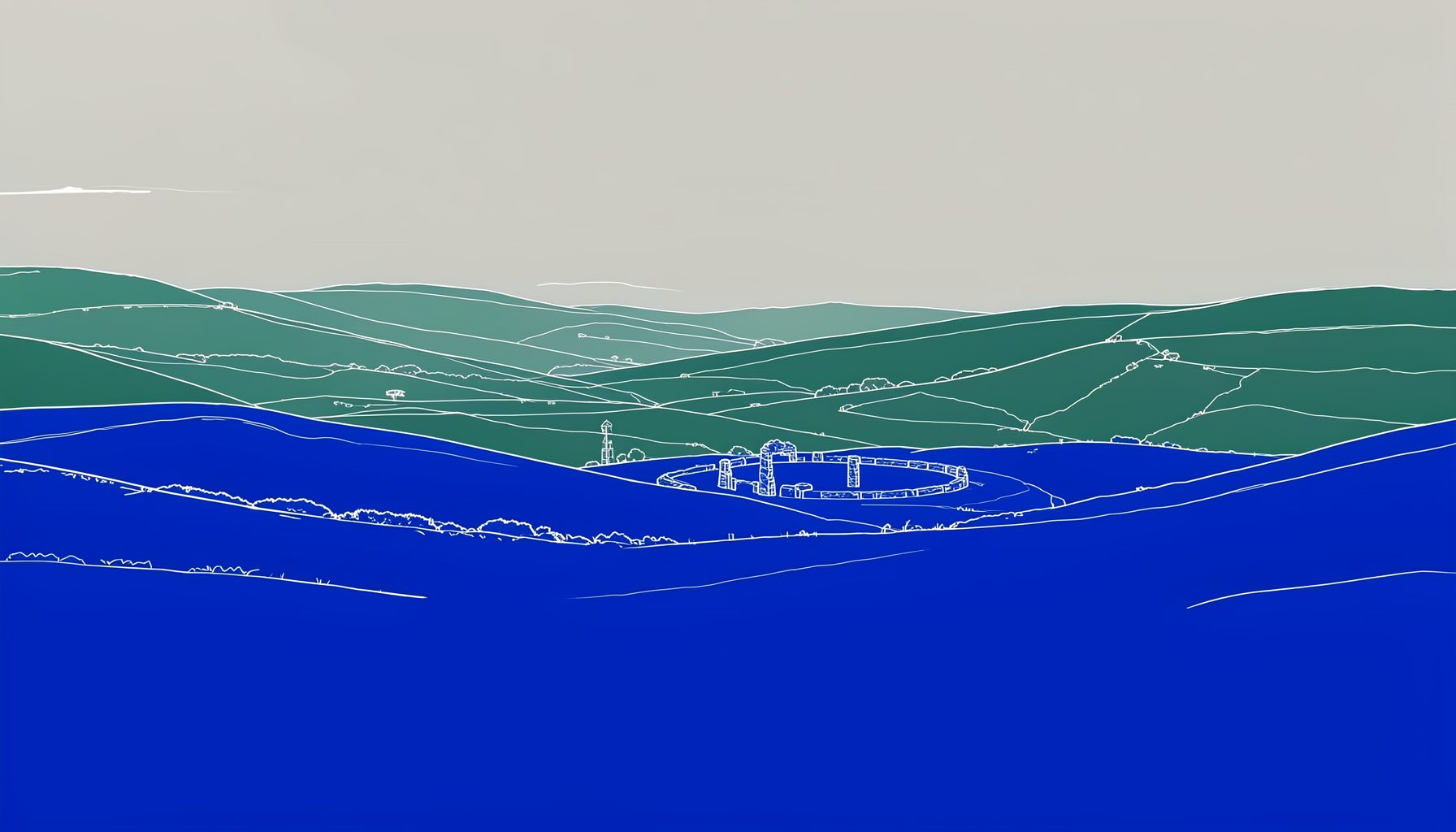
Designing a Festival Flag or Banner for Your Eisteddfod
A flag or banner is the heartbeat of any eisteddfod, the piece of cloth that everyone in the hall or on the maes looks for first. It tells visitors they have arrived at the right place, frames the stage, and quietly carries the identity of your committee and your community. For Welsh-Australian groups gathering from Hobart, Melbourne, Sydney, or the smaller regional pockets around Ballarat and Bendigo, a well-made banner does more than decorate; it anchors a centuries-old tradition to a new shoreline.
Designing one for an Australian eisteddfod, though, comes with a few quirks you won't find in the old country. The light is harsher, the wind can whip up out of nowhere on a coastal oval, and the suppliers you rely on for printing, fabric, or poles are scattered across suburbs rather than clustered around Y Maes y Gadair Ddu. A banner that looks sublime under Cardiff drizzle can fade or fray alarmingly quick under a Brisbane sun.
The good news is that a bit of planning goes a long way. Most Australian committees find they can produce something striking on a tight budget, especially if they start early and lean on the practical networks that already exist. Whether you're stitching a single pennant for the local Welsh chapel hall or commissioning a three-metre hero piece to fly above the stage, the same core decisions apply.
This guide walks through those decisions one by one, from the symbolism you choose to the print shop you trust with your artwork. It draws on the kind of know-how that Welsh societies in Australia have built up over decades of running eisteddfodau under southern skies, and it flags the small pitfalls that catch out first-time organisers. Grab a cuppa, and let's get your banner sorted.
Understanding the Symbolic Power of Festival Banners
A festival flag is not just a backdrop; it is a promise. The moment a guest walks through the door and sees the colours of Cymru unfurled above the registration table, they know the day belongs to them. For an eisteddfod, where bardic chairs, choral competitions, and folk dancing all sit under one roof, the banner does the job of a title page for a book. It gathers every element of the day under a single visual idea.
In an Australian setting, that visual idea often has to do double duty. Many Welsh-Australian eisteddfodau are run by societies that are culturally mixed, with members whose connection to Wales is one, two, or three generations deep. The banner can nod to heritage while still feeling fresh and locally relevant, especially if you fold in references to the place where the event is held. A stylised outline of the Brisbane River or the Melbourne tram network, paired with the red dragon, can make the design feel rooted rather than imported.
The banner also sets the tone for the rest of the visual language used on the day. Programmes, tablecloths, prize certificates, and competitors' costumes all sit in conversation with it. If you are still kitting out the competitive side of the event, it is worth browsing a guide on sourcing traditional Welsh costumes so the colour choices on the flag carry through to the stage. A little coordination here makes the whole afternoon feel considered.
Choosing Materials Suited to the Australian Climate
Fabric choice is the single biggest decision you will make, and it is the one that decides whether your banner survives its first summer. Cotton feels traditional and prints beautifully, but it bleaches out fast under Australian UV and grows heavy in coastal rain. A 110gsm polyester, or a knitted polyester designed for flag use, holds dye much longer, dries quickly, and shrugs off the kind of westerly that batters a stage in Warrnambool or Whyalla.
The right fabric is not hard to find. Spotlight, the craft chain with branches in every capital city, stocks a workable range of polyesters in cuts big enough for a banner. For larger flags, Bunnings Warehouse often carries outdoor flag fabric by the metre, and the staff at the special orders desk can usually point you towards a heavier 150gsm option if you ask. If you are anywhere near a Spotlight or Lincraft in suburban Adelaide or Parramatta, you can walk out the same afternoon with a length of material ready for the printer.
Weight matters more than people expect. A banner that flies beautifully on a still day becomes a sail in a southerly buster, and a flimsy pole will bend under the strain. As a rule of thumb, anything larger than about 1.5 metres square should be on a fabric with a real heft to it, and stitched with double hems rather than single folds. The extra few dollars spent on heavier cloth pays for itself the first time a gust hits mid-ceremony.
Colour Palettes and Imagery Rooted in Welsh Tradition
Welsh visual tradition gives you a generous palette to work with, even before you add your own flourishes. The red dragon, the daffodil, the leek, the triple harp, and the bardic chair all read clearly at a distance, which is what you need when a flag is flying ten metres up a pole. Deep greens, slate greys, and the muted golds of the Eisteddfod Crown translate well onto cloth and stand up to bright outdoor light without washing out.
In Australia, the temptation is to throw every symbol on the cloth at once, and the result is usually a muddle. Pick two dominant colours and one strong image, then let the rest support. Many Australian Welsh societies settle on a navy field with a single bold daffodil or dragon, and a small line of text in Welsh and English naming the event. That restraint reads as confident rather than sparse, and it photographs well when a local paper sends a journo along for the arvo.
Contrast is the unsung hero of outdoor banner design. The Australian sun is unforgiving, and pastels vanish against a blue summer sky. Aim for at least a sixty per cent difference in tone between the background and the main motif, and test the artwork by printing a small swatch before committing. Tape it to a fence outside the hall in full sun, walk ten metres away, and see whether the image still holds. If it does, you have a banner that will work from the back row of seats as well as the front.
Working with Australian Printers and Suppliers
Most Australian eisteddfod committees do not own a wide-format printer, and they do not need to. The country has a deep bench of trade print shops, from independents in regional centres to chains like Kwik Kopy and Snap Printing that have branches in every state. A standard 2-metre banner on knitted polyester, hemmed and with eyelets, generally lands somewhere between $180 and $320 AUD, depending on the finish and the turnaround. Spending a little more on reinforced edges is sensible, because the eyelet is the first thing to give way when a banner catches the wind.
File preparation is where most first-timers come unstuck. Printers want vector artwork wherever possible, exported as a PDF in CMYK at the actual finished size, with a bleed of around 10mm and any critical text kept well inside the safe area. If you have a committee member with Adobe Illustrator skills, fantastic; if not, Canva's free tier handles simple banners well enough, and the export settings let you save a print-ready PDF. Always ring the printer before you send the file, because every shop has slightly different expectations, and a quick chat can save a wasted run.
Lead times vary more than you would think. A straightforward job in Sydney or Melbourne might be ready in three working days, while a regional printer in Cairns or Launceston could need closer to two weeks, especially around spring when wedding and school banner season hits. Order early, and you will avoid the panicked phone call the week before the event. Many shops will also keep a digital file on hand for reprints, which is a quiet gift to next year's committee.
Practical Design Choices for Pole and Hanging Setups
How a banner hangs changes how it should be designed. A flag that flies from a vertical pole needs to read on both sides, which usually means either a two-layer construction or a screen-printed single layer with mirrored text. A flat banner that drops down behind a stage only needs to face forward, so you can keep the back plain and save money on print. Decide on the setup before you lock in the artwork, because the answer changes what the printer needs to know.
Pole and hardware choices are worth a moment of thought as well. A 3-metre aluminium pole, the kind sold at any Bunnings or hardware shop for under $80 AUD, suits most indoor venues, but outdoor stages often need something heavier, ideally with a ground sleeve or a sturdy base plate. Bunting and smaller pennants strung across the hall are a cheap way to add atmosphere and do not need any special hardware, just a staple gun, some fishing line, and a few willing hands on a Friday night setup.
If your eisteddfod is held in a venue with heritage rules, like a town hall with a protected facade, check the hanging points before you commit to a heavy banner. Strapping anything to a listed column in Ballarat's Town Hall or Sydney's Town Hall without permission is a fast way to lose your bond, and a polite email to the venue manager two months out will usually sort you out. A bit of courtesy up front saves a frantic rearrangement on the morning.
Caring for Your Banner Through the Year
A well-made banner should give you a decade of service, but only if you look after it. After each event, give it a gentle wipe down with a damp cloth and a tiny drop of mild detergent, then let it dry fully before folding. Polyester is forgiving, but mildew in a damp storage shed is the most common killer of festival flags, especially in humid parts of the coast from Cairns down to Coffs Harbour.
Storage matters as much as cleaning. Roll the banner around a wide cardboard tube rather than folding it, because creases eventually become cracks in the print, and store the tube in a dry cupboard or hanging rod. A simple cloth bag, the sort you can pick up at a cheap shop for a few dollars, keeps dust and insects off. Label the bag with the year and the event, so future committees know what they have inherited.
Small repairs are worth doing straight away rather than waiting for the next eisteddfod. A popped eyelet, a fraying hem, or a loose thread can be sorted in fifteen minutes with a needle, some strong polyester thread, and a cup of tea. Keep a small repair kit with the banner, and you will never again face the moment where the chair lifts and the flag gives a sad little flap. Treat the banner as part of the society's shared heritage, because that is exactly what it is.
Ready to start sketching? The team at Cymdeithas Eisteddfodau Cymru is happy to share templates, sample artwork files, and advice on what has worked for committees across the Welsh diaspora, including those in Australia. Drop the society a line, share your early ideas, and you will find a network of fellow organisers ready to help your banner fly true on the day.